
Clark County Arrest History Sources
Clark County publishes no multi-day CCDC blotter, no downloadable arrest archive, and no comprehensive daily log. The same gap exists at Las Vegas Detention Center, Henderson, and North Las Vegas. Live jail tools answer one question: who is in custody at this moment. They do not rewind the week. Treating a current entry as history would invent an archive that never existed.
A solid historical search keeps four records apart. The jail register shows the booking. The arresting agency's report tells its side. The court case tracks what followed. A public release might cover one notable arrest and nothing more. Dates can differ too. The arrest may come before intake, and the case may open after booking. None of these stands in for the missing county blotter.
Trace Clark County Arrest Records
Start from the event and work toward the record custodian. A date and an arresting agency help. So do a case number and a detention location. The live CCDC result can supply an arrest date or case reference. But its custody status reflects only the moment you searched, so note that time. For a fresh custody question, use Arrests Last 24 Hours. Earlier events call for the wider path described here.
- Identify whether LVMPD, Henderson Police, North Las Vegas Police, or another agency made the arrest.
- Search the correct court by name, case number, or ticket where the portal supports it.
- Request the arrest report or booking document from the agency or detention custodian, using a narrow date range.
- Check official police releases for selected incidents, but do not treat the release index as complete.
- Use news or third-party date indexes only to locate a lead, then confirm it with the agency or court.
The Clark County Justice Court public-access portal supplies a useful court cross-check.
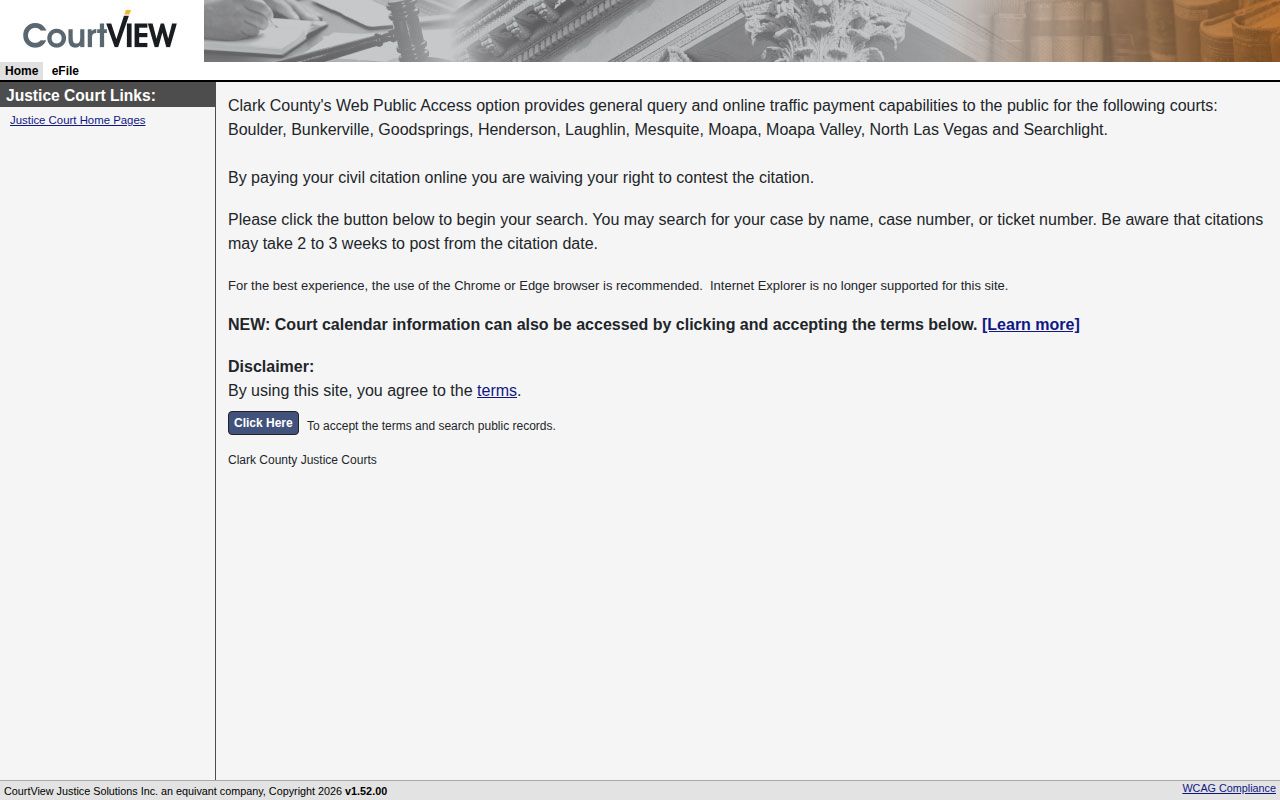
The portal covers court activity within its own jurisdiction, nothing more. It is not a jail booking archive.
Clark County Arrest Record Fields
No standard "blotter entry" exists. Field meaning changes with the source. The official CCDC interface sticks to custody and case labels. An agency arrest report may add narrative and officer details. Some parts may be redacted. A court portal logs proceedings rather than every booking detail. Read each field where it lives.
| Field | Meaning and limit |
|---|---|
| Name and ID | Displayed identity and agency identifier; confirm a same-name match. |
| Arrest date | Date tied to the arrest or case, not a web publication time. |
| Charge | Charge at that stage; it may later change or be dismissed. |
| Case number | Reference that can connect custody and court sources. |
| Bail or status | Temporary custody or court condition. |
| Scheduled action | A future event, not the final disposition. |
| Photo | No booking-photo field appeared in the inspected public CCDC result. |
A disposition is the recorded outcome of a case. That is where to learn the final result. Dismissal, reduction, or resolution all show up there, not on a booking screen.
Why Clark County Has No Blotter
Detention in Clark County is split four ways. CCDC handles county custody. Las Vegas runs its own city route for misdemeanor arrests. Henderson and North Las Vegas each operate separate detention searches. LVMPD's public news area posts events, not bookings. With that structure, no single custody query can act as a countywide arrest log. The Las Vegas Justice Court inquiry can link a known arrest to case activity. Sealed and protected matters stay hidden.
Clark County News Arrest Coverage
For Clark County arrests that make headlines, local newsrooms do much of the work. The Las Vegas Review-Journal crime section tracks major cases across the valley. So do the Las Vegas Sun, Fox5 Vegas, 8 News Now, and News 3 Las Vegas. Reporters choose which arrests to cover. News judgment drives that choice. So an arrest story you find there is a sample, not a full roster of who was booked. Pair it with jail and court sources for the wider picture.
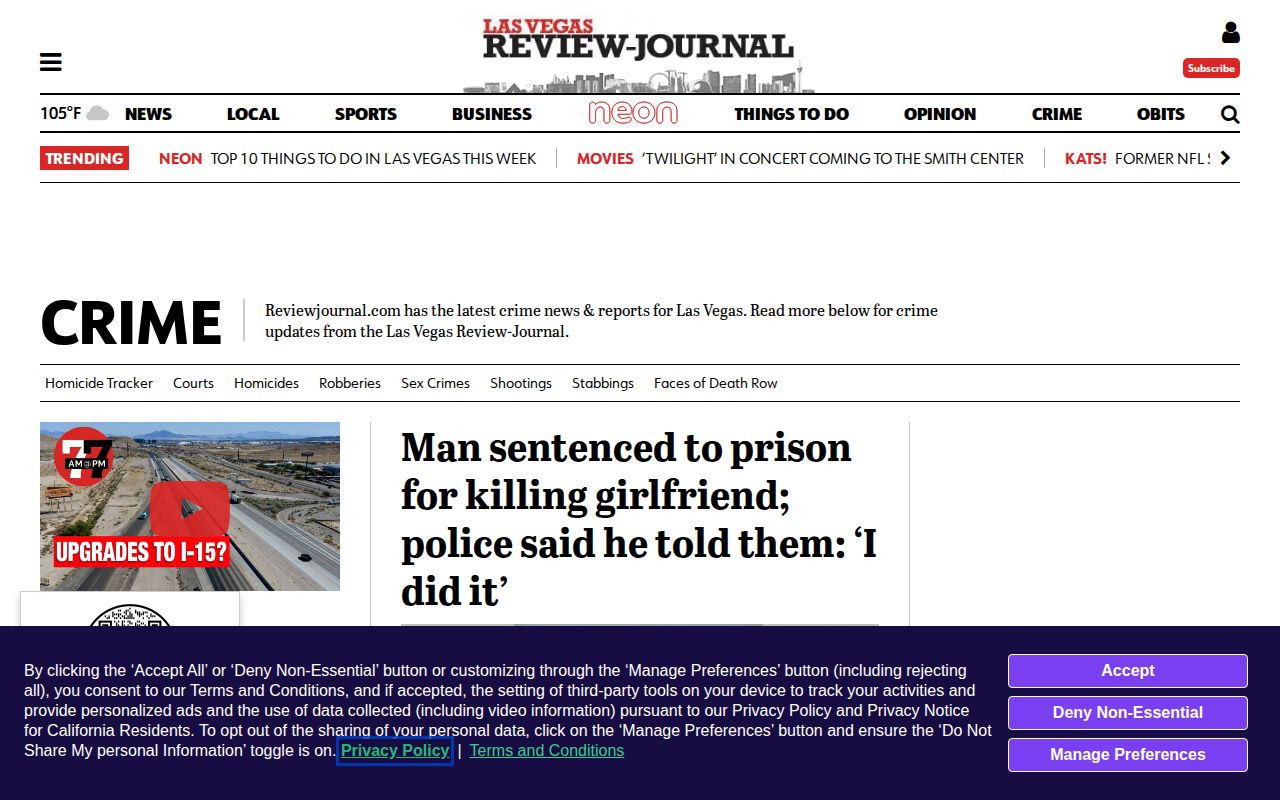
Treat an article as a dated lead. Check later coverage or the court disposition before concluding anything. RecentlyBooked keeps a Clark County last-30-days index. Mugshots.com holds older county material, and Nevada Arrests.org runs a statewide interface with unclear Clark-specific depth. All three are unofficial. They can lag, keep stale entries, or clash with agency records. Official detention, police, and court sources come first.
Clark County Arrest Archives
One rule comes from 2016. The Nevada Law Enforcement Records Retention Schedule sets a five-calendar-year minimum for the described jail register. Release orders must be kept three calendar years from release. The described inmate roster carries 90 days after update. These periods apply to specific record series only. They do not promise online survival. A public web result, arrest report, or booking photo may not stay available that long. If the agency-approved schedule has changed, the current one controls.
Older material starts with a focused Nevada Public Records Act request to the likely custodian. Name the facility, the date range, the person or case identifier, and the record type. Ask whether the record was retained, destroyed under schedule, sealed, or transferred. The Nevada State Library, Archives and Public Records matters only in one case. It applies if the agency names an archival transfer. The state archives and records-program page explains that transfer and request context. It does not imply recent CCDC pages moved there. Note: Retention rules preserve specified agency records, not a public, searchable Clark County arrest-log website.
Request Older Clark County Records
A live roster entry vanishes eventually. That is when a written request takes over. Clark County itself is not the custodian of police, detention, or court records. Its central records-routing page says so plainly. Each agency holds its own files. Send a request to the wrong office. You will wait longer for nothing that resembles a blotter.
LVMPD handles incident, traffic, and arrest report requests through its Records and Fingerprint Bureau. Expect identity checks and delivery limits, with extra steps for anything mailed. Henderson runs its own police-record process on its own retention schedule. North Las Vegas keeps a separate public-record route. It covers reports, photographs, 911 attachments, redaction, and research. These city rules govern their records, not a CCDC jail register automatically.
Details make or break a request. Give the full name and the approximate date. Add the arresting agency, the location, a case number, and the detention facility. Then name the exact document you want. An arrest report, booking sheet, release order, and jail-register entry are four different records. A broad sweep of every arrest over months forces research and redaction. A focused case request lets the custodian find one known series and explain any lawful withholding.
Courts fill in another stretch of the timeline. Public access for Clark County Justice Court spans several townships. Las Vegas Justice Court runs its own inquiry system. Sealed and protected cases may simply be absent. Calendars are not police narratives, but arraignment, hearings, and later events appear there. Match the court's case number and party data against the arrest record. Guesswork is not a way to join two similar names.
Keep dates from every source you use. Note when an article ran and when a court entry was reviewed. A first report can describe a charge that is later reduced or dismissed. The later court outcome should control any conclusion. Pieced together this way, the separate official records form a defensible history. Even so, Clark County publishes no continuous police blotter.
Search Public Records
Sponsored Results