
Clark County VINELink Transition
Nevada switched victim notification systems in 2025. The old VINE deployment is gone. SAVE, which stands for Survivors, Advocates, Victims and Enforcement, took over in August 2025. According to the Nevada Attorney General, VINE registration closed during the switch and the former search service followed. Most existing registrations carried over. Anyone who had enrolled through the VINE app had to sign up again.
An old bookmark, phone number, or PIN instruction may still float around in search results. It points to a dead service. The working route today is Nevada SAVE, which covers people in custody or under supervision anywhere in the state. CCDC took part in the old VINE program, but that history says nothing about how SAVE now runs. Treat every detail from the retired system as outdated.
Run a Clark County Custody Check
A custody check starts with a name or an offender ID. Both work. For a partial name search, SAVE asks for at least the first three letters of each name, split by a space. An ID number is the better choice whenever you have one. Be careful with multiple matches. A similar or shared name alone proves nothing. Compare the listed details before trusting any result.
- Open Nevada SAVE and choose the offender search.
- Enter the exact offender ID when available, or use the required portions of both names.
- Review each possible match and compare the displayed identifiers and custody details.
- Record the offender ID and exact displayed name for later searches or registration.
- Confirm an urgent or unclear result with the jail that should hold the person.
Start with the right jail. Someone booked at CCDC appears first in the county roster. A city misdemeanor may land a person in the Las Vegas city system instead. Henderson runs its own detention search. So does North Las Vegas. SAVE works best once you know where the person is likely held.
Clark County SAVE Custody Results
SAVE is an offender-based lookup for custody and supervision across Nevada. Updates arrive periodically, and nothing in the results counts as an official record. Someone released from custody may vanish from search. Even a registered user stays enrolled for future alerts. No booking photo appears at any point.
| Item | Use and limit |
|---|---|
| Name or offender ID | Helps distinguish a match; confirm against the responsible agency. |
| Custody or supervision status | Current statewide status as supplied to SAVE, not a complete arrest history. |
| Facility or agency context | Helps identify where to seek direct confirmation or records. |
| Notification registration | Associates a person with selected contact methods for later changes. |
| Booking photo | Not published by SAVE. |
A SAVE custody result answers only one question: who is in custody right now. It does not describe the charges in detail. Booking records filed elsewhere carry the full arrest and charge information.
Register Clark County Custody Alerts
Registering for alerts does not require a named profile. Leave the first and last name fields blank and the SAVE form treats the enrollment as anonymous. You still need an email address and a password. The form then asks one security question with an answer, and you pick SMS, phone, or TTY as your contact method. Victim advocates can identify themselves on the form too.
- Find and confirm the correct offender before opening registration.
- Choose whether to leave the personal name fields blank for anonymous registration.
- Provide the required email and password, then set the security question and answer.
- Select SMS, telephone, or TTY based on the channel that can be monitored reliably.
- Save the confirmation and offender identifier, then keep direct jail contacts available for urgent checks.
The official SAVE registration form shows the current choices.
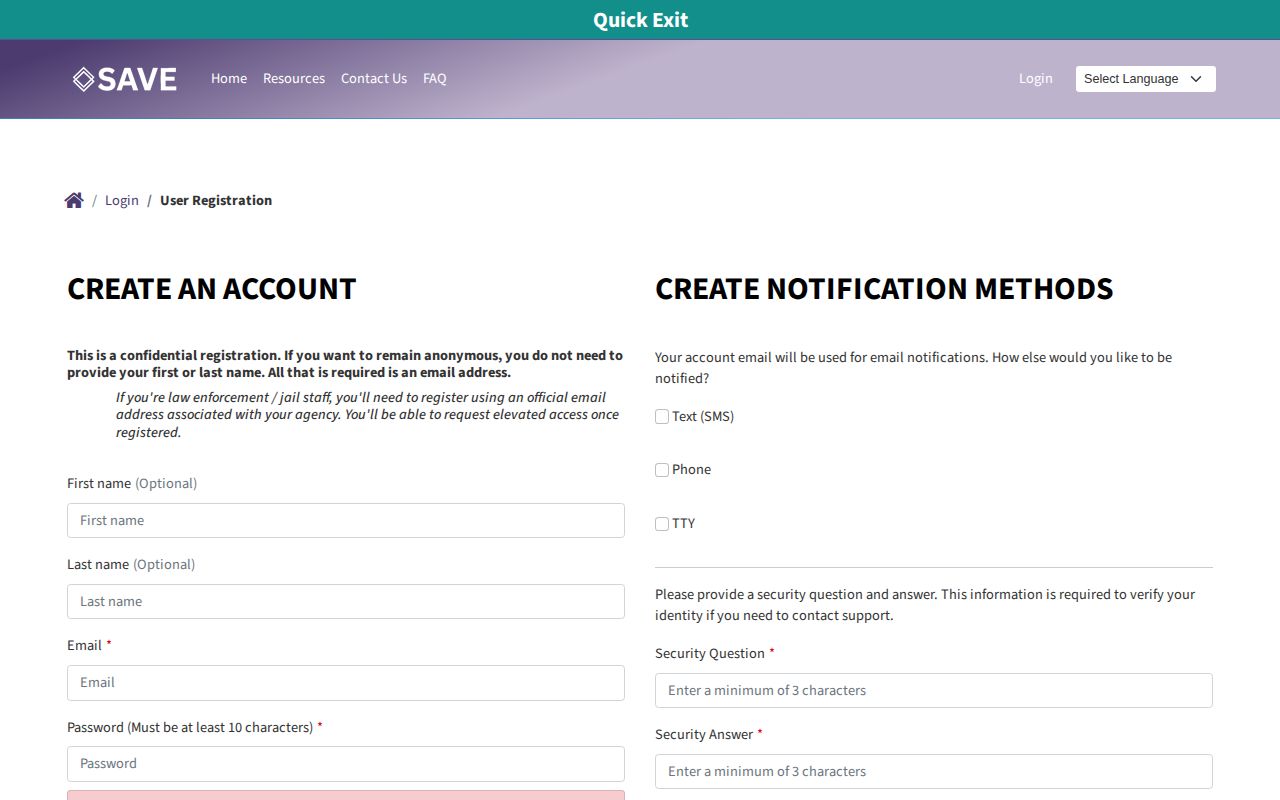
SMS, phone, and TTY contact on the current form replaced every assumption built around the old Nevada VINE workflow.
Clark County VINELink History
Older users may recall a phone line with a four-digit PIN, email registration without any PIN, and alerts covering release, transfer, escape, death, work release, or furlough. All of that belonged to Nevada VINE, which no longer exists. The details explain plenty of stale advice online. None of it works as current registration instructions. The legacy VINELink route appears here only to identify the retired service and the transition screen it may have shown.
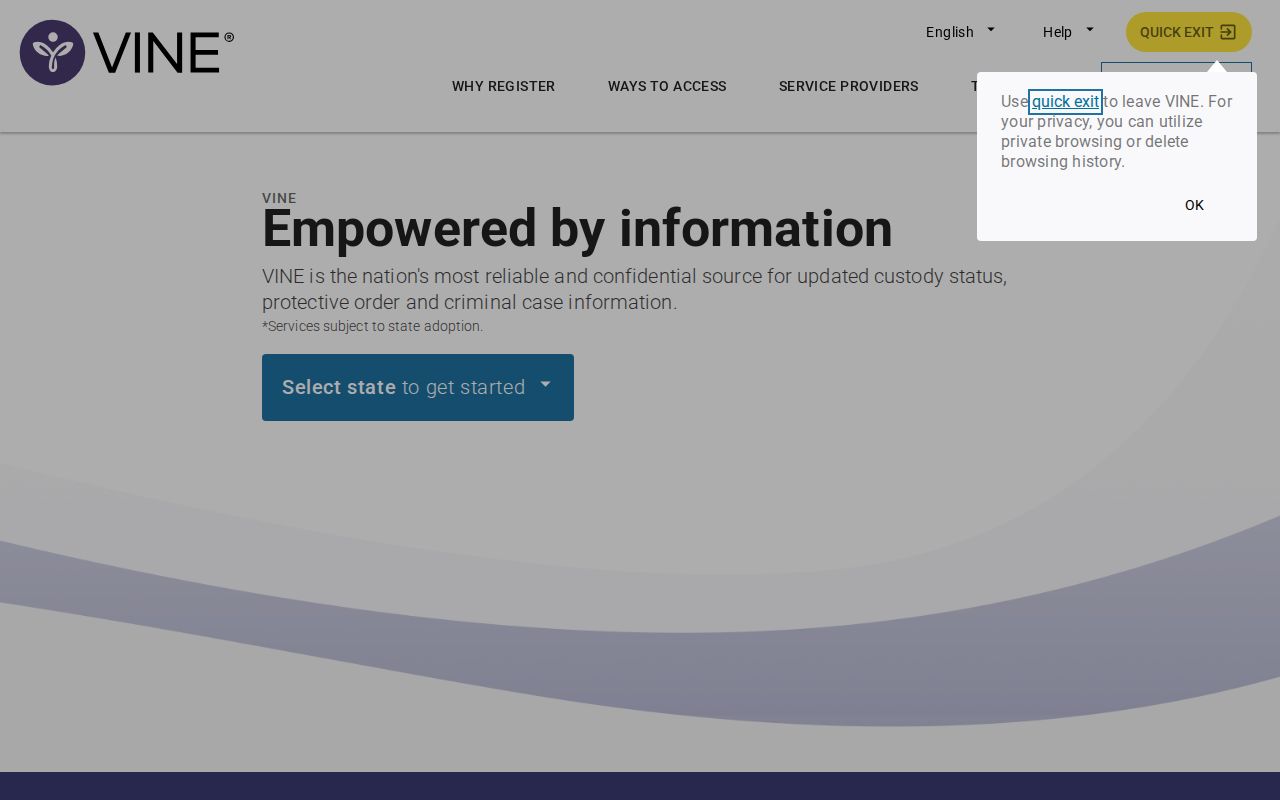
The old phone number is fully retired. So is the PIN process that went with it. The Nevada Attorney General transition announcement is the official word on the change. It confirms that app-based VINE enrollments did not transfer. Those users had to register again. If you once relied on the app, confirm your current SAVE registration directly. Never assume the old alerts still run.
Clark County Alert Limits
SAVE is not a same-day booking feed. A fast release can keep someone off the results. So can a city-jail intake, a juvenile or protected record, or a simple transmission delay. Federal custody falls outside its reach. Use the Bureau of Prisons locator for that instead. A state-prison hit through NDOC means a sentenced state inmate, not a fresh local arrest. Each system answers a different custody question.
For a very recent Clark County arrest, start with Arrests Last 24 Hours and call the likely jail. CCDC inmate information is 702-671-3900. Nevada SAVE support answers at 866-393-5445 around the clock. Its published email is NVSave@ag.nv.gov. Replies are expected inside three business days. Treat any alert as a prompt to verify, never as an official release order. The official CCDC instructions back this up. They warn that updates are periodic. Results cover current custody only.
Clark County Custody After Arrest
Match the record to the stage of the case. Someone booked hours ago sits in the local jail's system. A released person may drop off that roster while an arrest report or court case still exists. A transfer after a long sentence changes the picture. The person moves into the Nevada Department of Corrections offender search. Federal custody needs a federal locator. SAVE bridges some Nevada custody and supervision changes. But it stitches none of these into one complete history.
- Booking
- The intake process after an arrest is accepted by a jail.
- Transfer
- Movement from one facility or custody agency to another.
- Supervision
- A status monitored outside a jail or prison under stated terms.
- Disposition
- The court's recorded outcome, which supplies context missing from a custody alert.
Hold onto the offender ID. Keep the search time and agency name too. Those three details smooth out a missing result, confirm a custody change, and point a later records request in the right direction.
Respond to a Custody Alert
Treat any alert as a prompt for a fresh official check. The notice may report a release or a transfer. It may report another custody change too. Still, it is not a court order and not a certified jail record. Open the current SAVE result and record the time. Call the named facility when immediate confirmation matters. If the person has moved, ask which agency took custody. Ask also whether a new identifier now applies.
Pick notification methods with reliability in mind. SMS works well when the phone is close by. Telephone or TTY may fit other access needs. Email is required for the registration account on the current form. A reply from support is not instant. SAVE expects up to three business days for email questions. For service help that cannot wait, the 24-hour support number is the practical route.
Registration can stay useful even after a person leaves current search results. SAVE notes that someone no longer appearing may still matter. A future return-to-custody notification may still apply to that person. Keep your confirmation handy. A phone number or email address may change. Review contact details whenever that happens. Anyone who once used the VINE mobile app should be careful here. The Attorney General's transition notice required those users to register again.
Custody notice and case outcome remain separate things. A release can happen on bail, own recognizance, or completion of a local sentence. Transfer or another lawful basis may apply too. Continued custody tells you the person is still held, nothing more about the case. Turn to the proper court portal for arraignment, hearings, and disposition. When protected or sealed-record rules limit the public view, contact the court clerk directly.
Search Public Records
Sponsored Results